Jana Mohr Lone

What is a child?

I read an interesting article this week by Tamar Schapiro on “What Is a Child?” In a discussion about the possible justifications for what we generally believe are adults’ special obligations to children, for “treating someone like a child,” Schapiro (looking to Kant) suggests an understanding of the word ‘child’ as a status concept. The What is a child?

Northwest Center for Philosophy for Children Grant and Summer Workshop

Center for Philosophy for Children just received a three-year grant from the Squire Family Foundation! The grant funds a summer workshop for teachers that will take place this June, and also provides money for graduate student involvement in the program, materials and website support, and three years of transportation for UW students to get to and from Northwest Center for Philosophy for Children Grant and Summer Workshop

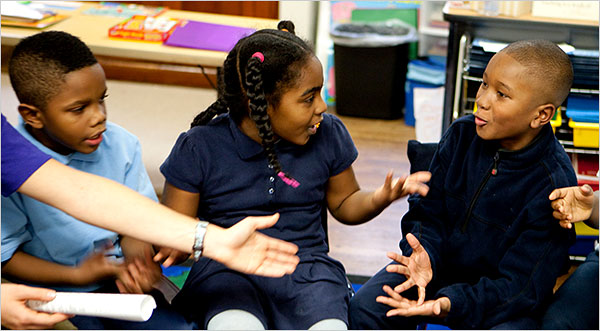
New York Times article on doing philosophy with children

I am living it up in Italy at the moment, but thought I would write this post to note that the New York Times published an article last week about philosophy in elementary school classrooms: http://www.nytimes.com/2010/04/18/education/edlife/18philosophy-t.html

Developing a philosophical self

As part of the book I’m working on, I’ve been thinking a lot about the development of our philosophical selves. In my experience, most children begin to exhibit a “philosophical self” around age 5, when all of the questions that demonstrate “wonder at the world” often start to emerge. This curiosity about and exploration of Developing a philosophical self

PLATO

After almost two years of work, the new national organization for pre-college philosophy in the US, PLATO (Philosophy Learning and Teaching Organization), has been born! PLATO is a national support, advocacy and resource-sharing organization for teachers, parents, philosophers and others involved in teaching philosophy to pre-college students. Launched by the Committee on Pre-College Instruction in PLATO

Imagine magazine: Pre-College Philosophy

The spring 2010 issue of Imagine magazine from Johns Hopkins University Center for Talented Youth is dedicated to exploring pre-college philosophy: http://www.nxtbook.com/nxtbooks/imagine/20100304_SFF

Time, nothingness and imagination

Another marvelous conversation last week with the 5th grade students with whom I’ve been working all year. At the beginning of the school year, one of the questions in which the students were interested was, “What is time?” We began this session with that question. One student suggested that time is the way “we measure Time, nothingness and imagination

Hotel Rwanda

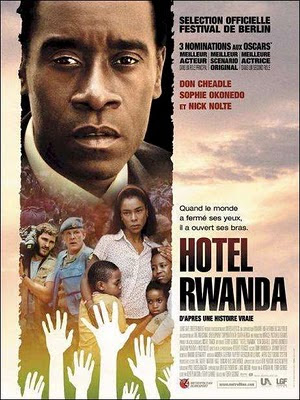
Hotel Rwanda As part of the “Moral Philosophy and Genocide” unit I am doing with eighth grade students, last week we watched the film Hotel Rwanda and then discussed it. We talked about the reasons the international community did not intervene in Rwanda, and what obligations the Western countries had to Rwanda during this period. Hotel Rwanda

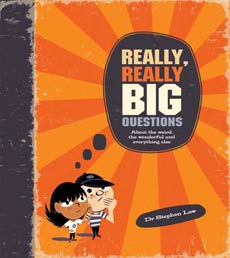
Really, Really BIG Questions

The picture book Really, Really BIG Questions by British philosophy professor Stephen Law is an engaging introduction to philosophy for anyone from elementary school age through middle school. With drawings and information about science, history, literature and the history of philosophy, the book explores questions such as: How can something come from nothing? What is Really, Really BIG Questions

When does morality begin?

I read a review of cognitive psychologist Alison Gopnik’s book The Philosophical Baby in the New York Review of Books recently. Gopnik suggests that the relationship between an infant and his or her caregiver constitutes the beginning of morality for us, the first ethical relationship. Carol Gilligan and others have emphasized the role of relationships When does morality begin?